
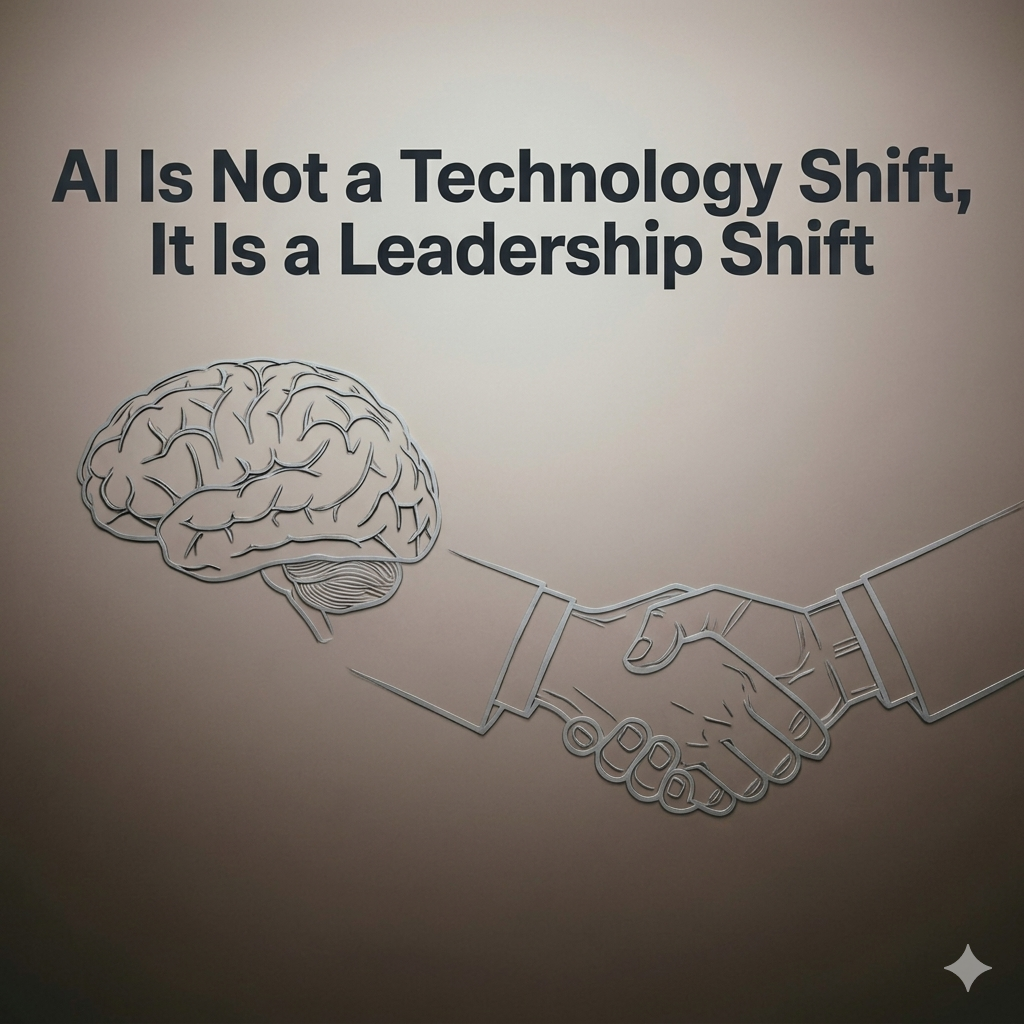
AI Is Not a Technology Shift, It Is a Leadership Shift

Everywhere you look, headlines scream about algorithms, neural networks, and automation. Boards ask, “What’s our AI strategy?” IT teams rush to buy tools. And somewhere in that chaos, we forget the only question that actually matters: “Are our people ready for this?”
Here’s the truth from someone who studied both technology and human behavior: AI is not a technology shift. It is a leadership shift, and it must be human-centric.
The trap we all fall into
I’ve watched brilliant leaders treat AI like a software upgrade. They delegate it to the Digital heads, approve the budget, and expect magic. Six months later, they have expensive dashboards and confused employees who quietly revert to old habits.
Why? Because technology changes in days; people change in months. You can install AI overnight. You cannot install trust, curiosity, or adaptability.
What Human-Centric leadership actually looks like
As someone who believes HR is the heartbeat of transformation, here is what I’ve seen work:
1. Start with fear, not features – Your team isn’t resisting AI because they’re stubborn. They’re worried about becoming irrelevant. Address that first. Say out loud: *“No one here is being replaced. We are being reshaped.
2. Make learning psychological, not just technical – Don’t just teach prompt engineering. Create safe spaces where people can say, “I don’t get this,” without judgment. The best AI adoption happens in cultures where vulnerability is allowed.
3. Lead with questions, not answers – The leaders who thrive in this era don’t pretend to have all the answers. They ask: How might this tool make your work more meaningful? They co-create the future with their teams, not for them.
4. Measure humanity, not just metrics – Yes, track efficiency. But also track morale, autonomy, and whether people feel more creative or more robotic. If AI makes your team feel smaller, you’ve built the wrong future.
The Real Job of Leaders Now
My dual lens – technology and HR – has taught me this: AI will handle the tasks, but leaders must handle the transition.
Your job is no longer to be the smartest person in the room. It is to be the most human. To hold uncertainty with steadiness. To turn anxiety into agency. To remind people that tools serve humans, never the other way around.
The organizations that will win this decade are not the ones with the fanciest AI. They are the ones where leaders looked their people in the eye and said, “This changes everything, but we’re walking through it together.”Technology is the easy part. Courage, compassion, and clarity - that’s the real upgrade.